
Low NPS and unhappy customers with no follow-up call?
A customer gave a low score and no one called them back. Here is where follow-up with dissatisfied customers gets lost, and how to put re-contact back into production.
Follow-up with dissatisfied customers after NPS
Follow-up with dissatisfied customers identified through NPS is the re-contact that starts from a low score, usually 0 to 6 on a scale of 0 to 10, and reaches a person at the company. That person asks for the reason, records what happened and leaves a visible outcome, not an automated thank-you message. The score signals friction that is still unresolved. The call-back checks whether the relationship can be repaired before the customer stops buying without saying a word.
In practice, the questionnaire does its part and then stops. A survey goes out after an order, a delivery or a service call. The customer picks a number and sometimes writes a couple of lines. The score stays inside the survey tool, or ends up in a spreadsheet downloaded at the end of the week. In meetings, high scores get discussed because they are easier to talk about. Low scores have no name next to them, no deadline, and never enter the queue of whoever should be making the call. By the time someone reviews them, the reason has gone cold and the customer has already decided whether to stay, without saying so.
Why re-contact after a low score gets lost
Re-contact gets lost in the handoff between the tool that collects the score and the person who should make the call, because that score never becomes a task with an owner and a deadline.
It is almost never a matter of bad intentions. It is a gap between two systems that do not talk to each other. The survey tool knows the score. The management system knows the order, the invoice and sometimes the phone number. The calendar of whoever sells or supports knows today's appointments. None of the three, on its own, knows there is a call to be made. Follow-up with dissatisfied customers lives precisely in that gap: everyone sees one piece, no one sees the whole task.
When scores are collected but the call-back has no owner
If the questionnaire belongs to everyone, it belongs to no one. The communications team sends it. Support never sees it. The account manager finds out only if an email survives among all the others. There is no name on the line: who calls, in what time window, with what outcome. Without that name the score is an archive, not a task. At the end of the month the spreadsheet gets reviewed, and meanwhile the customer has already read the silence as indifference.
When the calendar is already full and the low score sits in the queue
Someone who lives by appointments and quotes does not open the scores spreadsheet in the middle of the day. The call-back has no slot in the calendar, so it loses out to everything that has a deadline. No reprimand is needed. What is needed is for the low score to enter the same queue as every other task, with a visible priority. Otherwise it stays the job that gets done when there is time, which is almost never. The customer, for their part, cannot tell the difference between "we are busy" and "we do not care".
When sales and support are separate and the handoff breaks down
The customer flags a delivery that went wrong and the score reaches the person managing the commercial relationship, who does not have the order details. Or it reaches support, which fixes the individual case and does not update the person who will need to discuss the relationship. The handoff is the point where re-contact breaks down: two people each think the other is handling it. The customer receives, at best, a reply about the parcel, and no word about the score they left.
A low score without a dated re-contact is not a satisfaction data point: it is an open task that no one has taken ownership of.
What should happen after a low score
After a low score, a concrete task opens: a person calls back, asks for the reason, notes the facts and closes the loop with a visible outcome on the record.
The scale runs from 0 to 10. In this practice, scores from 0 to 6 are detractors, the ones to call first. Passives, 7 and 8, should not be ignored, but they are not the same signal: they have not said they would speak badly of you, they have said they are not convinced. Promoters, 9 and 10, are a different task, one of thanks and possible referrals, and it should not take queue space away from those who have flagged friction.
The loop closes only if the record shows what you heard and what you decided. "Called back" with no reason is not enough for whoever reads the record a month later. And an automated thank-you sent to everyone, detractors included, is not enough either: that message says the score was counted, not that it was read.
- Read the score and the comment together before dialling.
- Check the phone number, the contact person and the most recent order or service call, so you do not ask them to repeat what you already have.
- Assign a person who can listen and who knows what the company can realistically offer.
- On the call, ask for the reason, not a justification. Note the facts, not a judgement about the customer.
- Agree on only one step you can actually keep, or state clearly what cannot be changed.
- Write the outcome: resolved, in progress with a next step, or closed because the customer does not want further contact.
- Remove the customer from the open detractors queue so they are not called twice for the same score.
Tone matters as much as content. A customer who gave a very low score does not want a defence of the price list in the first few seconds. They want to feel that those two lines reached a real person. If they cannot talk, a record of the attempt and a second pass should remain. Silence with no note looks like indifference, even when it was just a busy day.
There is also the case of the empty comment. The number says something did not work, the words do not say what. In that case the call starts with an open question, not a guessed cause. Inventing the reason, even with good intentions, makes the customer feel unheard a second time.
How custom software takes ownership of detractors
Custom software takes ownership of the detractor when a low score automatically creates a task in the system where you already work, complete with owner, deadline and outcome, instead of sitting in a separate spreadsheet.
A spreadsheet is convenient for exporting. It is fragile for working. Rows get duplicated, a filter hides a score, two people edit the same cell, and no one can see whether the call-back was made or only promised. An application built around the process does something more focused: it receives the score, recognises the threshold you have chosen, opens the task and assigns it. The free-text comment stays attached to the task, not in a column that gets lost when scrolling.
This only holds if the customer data actually makes the call possible. An outdated number, or a contact who no longer works there, causes the re-contact to fail before the first word. This is the subject of 5 errors that cause customer data quality to collapse in the CRM: if the master data does not hold up, automating the call-back amplifies the error instead of removing it. The system should surface the gap, not fill it with a contact taken from an order placed two years ago.
What the record should contain before the call
Before calling, the person with the phone in hand should see a few facts, all accurate, not a summary padded out to look complete. If a field is missing, the record shows it as blank. A visible gap is better than a phrase inserted just to avoid leaving white space.
- Score, date of the score and comment text, exactly as it was written.
- Contact name, phone number and role, with the date the contact was last updated.
- Most recent order, service call or internal note, in one readable line.
- Owner of the call-back and the window within which it should happen, as decided by you.
- Previous attempts, with the time and outcome of each.
- What the company can offer in this case, and what it cannot, written before the call.
- Final outcome and next action, both required to close the task.
- The customer's preference on further contact, so a subsequent send does not disturb them again.
When the loop closes, the customer should not remain in the open detractors group. The label should be updated from the task status, not by a manual copy at the end of the month. This is the same principle as letting customer segmentation update itself: a static label describes an old score, not the current relationship. If the customer has asked not to be contacted again, that choice also applies to the next questionnaire.
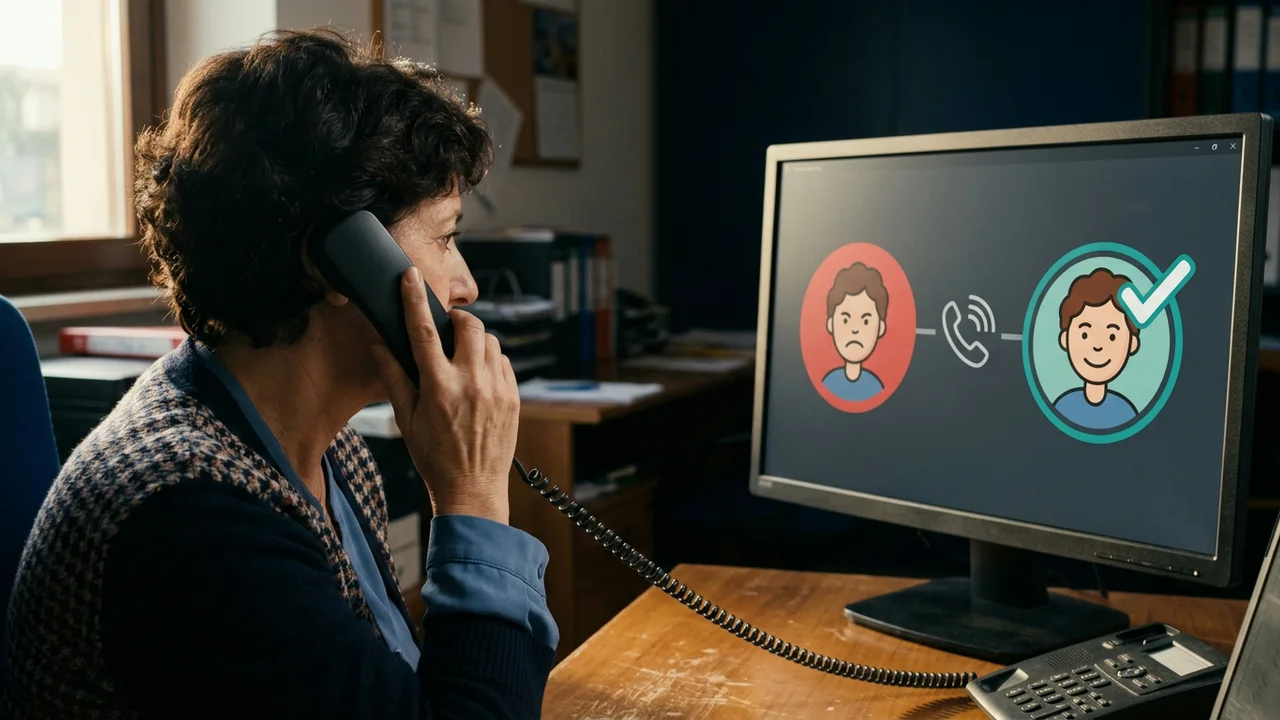
Where an agent helps and where a person must decide
An agent can organise the file, highlight the tone of the comment and suggest a set of questions, but the call to a dissatisfied customer is decided and made by a person.
The repetitive work in this flow is not the conversation. It is collecting the score, the comment, the most recent order and previous attempts into a single view, and notifying the owner that the task is open. An agent acting on data can handle that preparation. It can also flag whether the comment mentions a delay, a price or a tone in support. That reading helps you start from the right sentence. It is not a verdict on the customer, and should not be treated as one.
The call is a delicate action. A message with the wrong tone, a promise you cannot keep, or re-contacting someone who asked not to be disturbed, can worsen the relationship you were trying to repair. That is why human confirmation stays on the call and on any commitment made to the customer. Autonomy can grow in the preparation of the file, where it is possible to check whether fields match across systems. It does not grow on the voice the customer hears, until that step has been observed and corrected by a person.
An assistant that answers recurring questions on a website does not replace this step. The difference lies in the type of work, as shown in the guide AI Chatbots for customer service in SMEs: that guide covers responses to repeated questions based on your own data. Here the subject is a relationship that is already strained, one that calls for a name and an ear. Automating a standard reply to a detractor is the fastest way to show them that their score was not read.
The free-text comment and the score should be read together: the number says there is friction, the words say where to start on the call.
Where to start with the first re-contact flow
The first flow to put into production is a single one: every score below the threshold you have chosen opens an assigned task, with a written outcome at closing.
Do not start from every touchpoint. Start from the questionnaire you already send, if you have one, or from a single moment when the customer can tell you how things went, for example after a delivery or after a service call. The narrow scope gets tested in the field: you check whether tasks open, whether someone closes them, whether the comment arrives intact. Only after that does it make sense to expand to other channels, such as a public review or a complaint email. A design that covers everything but does not run teaches nothing.
Keep out of the first flow anything that is not yet clear. If you do not know who can authorise a return, a replacement or a discount, that decision should not be delegated to an automated text. If two systems do not talk to each other, the first useful step can be just the handoff of the score from the questionnaire to the queue, with the rest still read manually. A short stretch that runs every day is better than a long project that is only visible at the end, by which point the spreadsheet has already become the habit again.
Before expanding, check three things, without turning them into a decorative dashboard. Open tasks have a real owner, not a generic inbox. Outcomes are written using the same words each time, so they can be re-read consistently. The next questionnaire does not go out if the previous low score is still open. If any one of these three is missing, the flow produces movement but not closure. The customer may even receive a second survey request while still waiting for a word about the first.
How Leomat puts re-contact into the software you already use
Leomat designs and builds complete web applications and the environment in which they run: database, interface, infrastructure, deployment and security.
The studio builds complete web applications, from the database to the interface, and the automations that remove repetitive work. Agents act on data under human supervision: every action is observed and verified by a person, and sensitive actions require confirmation. A call to a dissatisfied customer is that kind of action. The voice comes from whoever knows the relationship and knows what can be promised.
Among the modules described for recurring business problems is the analysis of the tone of reviews and customer feedback. It is a starting point for avoiding manual re-reading of every comment, not a call-back already made. Leomat builds custom management systems, from the database to the interface. The system and the environment that supports it go into production together: monitoring, logging and correction, not a demo that impresses and then goes dark.
The method starts from the process as it exists today: who takes each step, where it breaks down, what stays in people's hands. If a step is not worth automating, that is said upfront. Autonomy grows only where it has proven reliable. To see how the system is built around the process, the reference is custom software and agents under human supervision.
What should you do when a customer gives a low NPS score?
Open a task with an owner, not a generic reminder. Read the score and the free-text comment together, check that the phone number and contact are correct, and have the call made by a person who can listen without defending the company in the first second. During the call-back, ask for the reason, note the facts, and agree only on what you can actually do. Then write the outcome on the record: resolved, in progress, or closed because the customer does not want to be contacted again. Without that outcome the low score goes back into the queue and someone reviews it as if it were new, with the risk of a second call about the same friction.
Can the entire follow-up with dissatisfied customers be automated?
The opening of the task, the assignment, the file and the notification to whoever needs to call can be automated. Automating the voice the customer hears, or the promise you make to them, is not advisable. A low score is a delicate signal: a text sent to everyone, or a call without human confirmation, can worsen the relationship. An agent is useful if it prepares the facts and stops where a piece of data is missing, instead of inventing it. The closing, with the written outcome, can return to the system on its own only after a person has decided what happened. Everything else, the threshold, the owner and the time window, is set by you based on the real process.
Does an automated message replace the phone call?
No, if the score is low and the customer has left unresolved friction. An identical thank-you sent to everyone says the questionnaire was received, not that anyone read the reason. It can work as an acknowledgement, as long as it does not look like the case being closed. The phone call, or a personal contact from an identifiable person, is needed to ask for the reason and to say what you can do. If the customer does not respond, the follow-up message starts from the same task, with a record of the attempt, not from a disconnected send. Two channels that cannot see each other produce the opposite effect: the customer feels chased and ignored at the same time.
How do you avoid calling the same person twice?
The task should be a single one for that score, with a status visible to both sales and support. Attempts are noted on the same record, not in private emails. When there is an outcome, the customer leaves the open detractors queue and the segmentation updates from that status. If they have asked not to be contacted again, that preference also blocks the next questionnaire and any agent that would prepare a new file. The duplicate almost always comes from an export pasted onto a spreadsheet that has already been worked on, or from two queues that do not share the outcome. A single task, in the same system as the master data, removes that duplication at the root.
This post was produced with AI
Content (text, processing, quotations and images) generated or artificially manipulated by artificial-intelligence systems. Notice provided under the transparency obligations of Article 50 of Regulation (EU) 2024/1689 (AI Act), applicable from 2 August 2026.