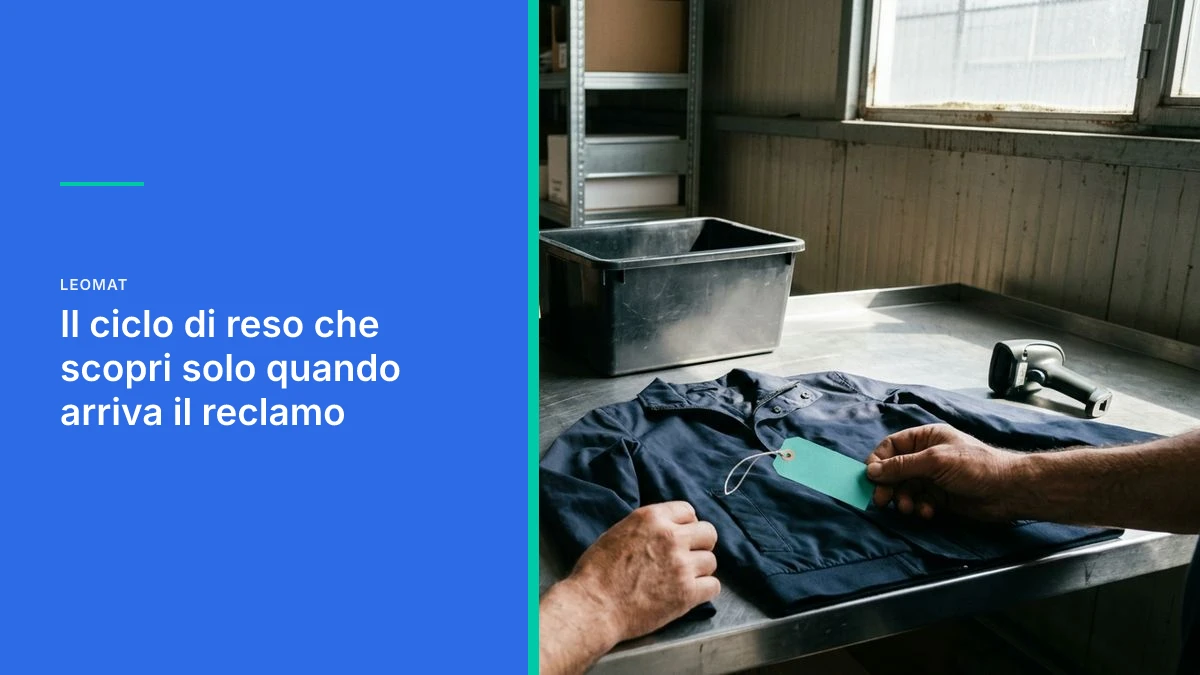
The return cycle you only discover when the complaint arrives
Why returns stay invisible until a complaint comes in, and how a small business can track every stage of the process with AI automation.
Automated Returns Management for SMEs: Why the Problem Only Becomes Visible Too Late
For SMEs, automated returns management is the set of rules and tools that track every stage of a return, from the customer's request to the refund or replacement, without any manual steps involving email or spreadsheets. Its purpose is to make visible a process that, in many small and medium-sized businesses, remains invisible until a complaint or a negative review forces someone to intervene urgently.
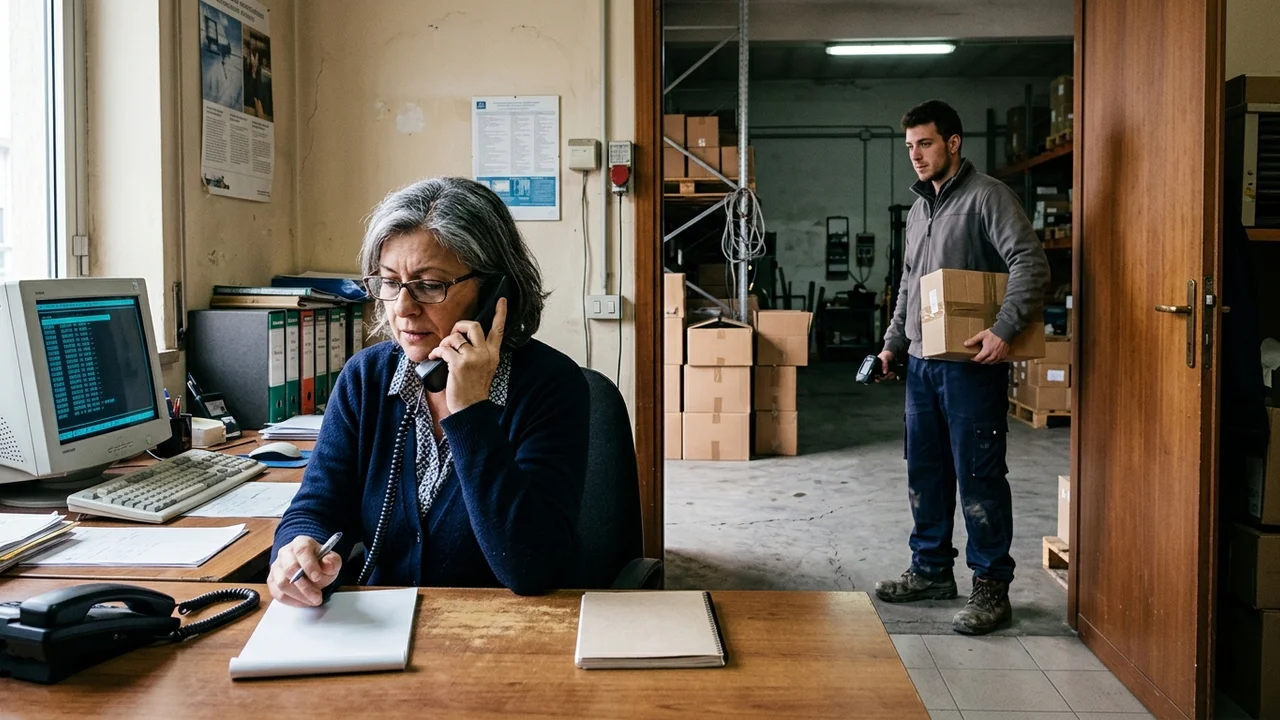
In many SMEs, the returns cycle lives across multiple email inboxes, a paper form filled out by the warehouse, and an internal chat where someone asks for updates. There is no single point where a manager can see how many returns are open, for how long, and at what stage. The result is that a return only becomes visible when the customer writes to complain about the delay, and by that point the reputational damage is already done, regardless of how correctly the goods were handled in the warehouse.
The Hidden Consequences of Untracked Returns Management
An untracked return costs more operational time, generates duplicate or missed refunds, and undermines customer trust long before the problem becomes visible to senior management.
When a return passes from an email inbox to a shared spreadsheet, every manual step is a point where information can be lost. One staff member marks the return as received but nobody updates the management system, another processes the refund but does not notify the warehouse, and the returned goods end up in a limbo that nobody monitors. Meanwhile the customer waits, and every day of silence increases the likelihood that they will write a negative review rather than a simple request for clarification.
- Sales team time wasted answering questions about the status of a return.
- Refunds processed twice or not at all, because nobody has visibility of the actual status.
- Returned goods sitting in the warehouse without being put back into stock or disposed of.
- Complaints reaching customer service before the operations department, with time lost in internal communication.
A returns cycle without centralised tracking is not slow: it is invisible, and what cannot be seen cannot be corrected in time.
How AI Automation Makes Every Stage of a Return Visible
An AI automation system connects the return request, the goods quality check, the management system update, and the customer communication into a single traceable flow.
In practice, when a customer initiates a return request, the system automatically generates a ticket with an initial status visible to the entire team. Every subsequent step, from goods receipt to quality check through to the refund, updates the same ticket without anyone needing to send an update email. The customer receives automatic status notifications, and the internal team has a single dashboard showing how many returns are open and for how long.
Those Who Handle Few Returns per Month but No Longer Want Scattered Emails
Even at low volumes, the dispersal of information across emails and chats is the real hidden cost: an automated flow avoids having to manually reconstruct the history of every return each time someone asks for an update.
Those Who Have a Warehouse Separate from Customer Service
When the warehouse and customer support do not share the same system, a return becomes a game of telephone. Connecting the two flows with AI automation means the warehouse updates the status and customer service sees it in real time, with no intermediate steps.
What Changes in Practice for an SME: Traceability and Control
With automated traceability, a manager can see in real time how many returns are open, which ones are delayed, and where the process has stalled, without having to ask anyone for updates.
This changes the way work is done every day. Nobody needs to keep track of open returns in their head: the system automatically flags those that have been stalled for too long, making it possible to intervene before they become a complaint. The same logic can be applied to other SME processes as well, such as order management or the integration between the management system and the e-commerce platform, when those systems do not communicate with each other.
Those Who Want to Understand Where Time Is Being Lost Before Investing in New Software
Before automating, it makes sense to map where the process currently gets stuck: often the problem is not a lack of tools, but a lack of a flow that connects them. This also applies to those wondering whether their systems truly communicate with each other, as discussed in 7 signs that your software systems are not talking to each other.
Those Who Already Have an E-commerce Store but Handle Returns Manually
If the online shop generates orders automatically but returns remain a manual process, the bottleneck is clear: it is also worth reading about how to recognise the signs of a management system and e-commerce platform that do not communicate, because a return is often the first visible symptom.
Traceability does not eliminate returns, but it reduces the time currently spent searching for where they have stalled.
A Concrete Example of an Automated Process in a Company
Automating a documentary or operational process in an SME can reduce management time, as has been seen in other contexts where a manual flow was replaced by a tracked system.
In a concrete case followed by Leomat, automating the documentary process at a company in the parapharmaceutical sector led to an 85% increase in document generation speed within 90 days. The same principle applies to the returns cycle: there is no need to reinvent the process, the goal is to make it traceable and automatic at the repetitive steps, freeing up time for the decisions that truly matter.
How Leomat Helps SMEs Bring Order to the Returns Cycle
Leomat works with Italian SMEs to build tailored AI automations, without requiring an in-house IT team. If your company's returns cycle is currently scattered across emails, spreadsheets, and chats, the first step is to map where control is being lost and connect the systems you already use with an automated flow that updates the warehouse, the management system, and the customer at the same time. Among the available solutions is the development of a custom ERP tailored to the company, designed to integrate processes such as returns into a single traceable system. You can find out how to approach the topic by visiting Leomat and discussing your company's specific needs.
Frequently Asked Questions About Automated Returns Management
How Much Does It Cost to Automate the Returns Cycle in an SME?
The cost depends on how many systems need to be connected and how complex the current process is. An initial mapping of the existing flow makes it possible to determine whether a lightweight automation is sufficient or whether a deeper integration between the management system, warehouse, and customer service is needed.
Is an In-House IT Team Required to Manage an Automated Returns System?
No, it is designed specifically for those without a dedicated IT structure: the technology partner handles the initial configuration and maintenance, while the internal team works on the dashboard without needing to understand the underlying technical workings.
What Happens if the Customer Does Not Receive Updates on Their Return?
With an automated flow, the customer receives notifications at every status change without anyone having to write manually. This reduces the number of requests for clarification and the likelihood that silence will turn into a public complaint.
Does Returns Automation Work for Companies with Few Orders per Month?
Yes, the main value lies not in volume but in visibility: even with just a few returns per month, having a single point of control prevents information from getting lost across emails and internal chats.
This post was created with AI
Content (text, processing, quotations and images) generated or artificially manipulated by artificial-intelligence systems. Notice provided under the transparency obligations of Article 50 of Regulation (EU) 2024/1689 (AI Act), applicable from 2 August 2026.